Learning To Deal With Life's Unexpected Events
by

Tom Mourikis
Published on
•
4
minute read
Last updated on
Key Takeaways
- Unexpected events are a normal part of every health journey, not a sign of failure
- Noticing your eating patterns before a busy period makes it easier to stay grounded when things shift
- Eating outside your routine — at restaurants or social events — is something to navigate, not avoid
- Difficult emotions are worth reflecting on, not pushing past. They often carry useful information
- A reset starts with one small honest action, not a complete restart
Life does not pause for your plans. A sudden injury, a packed social calendar, a stressful week at work, a holiday that turned into several holidays — these things happen, and they affect how you eat, how you move, and how you feel about both.
Learning to deal with life's unexpected events is not about having more willpower or better excuses. It is about building the awareness to notice what is shifting and the flexibility to keep going anyway.
Here are some of the most common situations that pull people off track, and how a more reflective approach can help you navigate them.
When time disappears
Time is the most common factor people point to when their eating patterns shift. There are 24 hours in a day for everyone, and fitting new habits like cooking, walking, or even pausing to eat mindfully can feel impossible when the day is already full.
The most practical starting point is noticing your patterns before the busy stretch hits. Most days follow a loose rhythm — when you tend to eat, who you eat with, where your food comes from. The more clearly you can see that rhythm, the easier it becomes to plan around the moments that are predictable, and stay steady when the unpredictable ones arrive. AteMate's journaling features are built for exactly this kind of pattern recognition.
When food is out of your hands
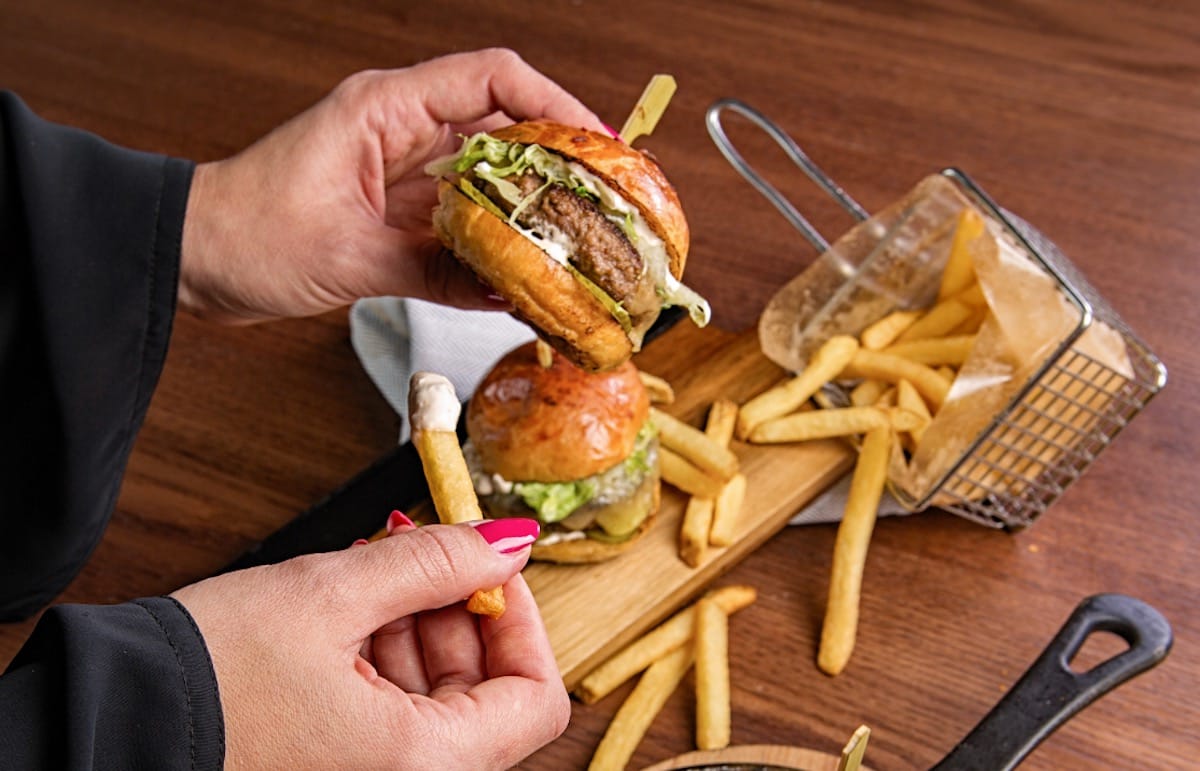
Restaurants, delivery apps, celebrations, and social events are a regular part of life. Eating food you did not prepare yourself is not a problem to solve. It is simply a context to navigate.
Taking a moment to look at a menu before you order, noticing how hungry you actually are, or simply staying curious about what you are eating rather than anxious about it — these small shifts make a real difference over time. The goal is not to eat perfectly in every social setting. The goal is to stay connected to your own experience, even when the setting is outside your control.
When emotions take over
Sometimes the barrier is not time or logistics. It is a feeling. Anxiety, frustration, low motivation, or a creeping sense that nothing is working can make it very hard to stay consistent with anything, let alone your eating habits.
These moments are worth paying attention to rather than pushing past. Reflective journaling after a difficult day can help you see what was actually going on — not to judge it, but to understand it. The more you understand your own patterns, the less power any single hard day has over the longer arc of your progress.
If you have been feeling like you have fallen behind or let yourself down, it helps to remember that noticing is itself a step forward. You have not failed. You have information.
When you need to reset
Unexpected events are not detours from your path. They are part of it. Every time life gets complicated, you have a chance to learn something about how you respond under pressure, what your real priorities are, and what kind of support actually helps you.
A reset does not require starting over from scratch. It requires one small, honest action — logging a meal, noticing how you feel, or simply deciding that today counts even if yesterday did not go the way you hoped.
Finding your Healthy is not a straight line. It is a practice, and unexpected events are where most of the learning actually happens. See how AteMate supports you through the everyday and the unexpected.
Tom Mourikis is the founder of AZLO Coaching, a nutrition and exercise service with a focus on mindfulness, education, and accountability. He has degrees in Movement Sciences and Physical Education, as well as certifications as a Nutrition Coach (NASM) and a Strength and Conditioning Specialist (NSCA). After having previously lived in Chicago, Athens, and Guangzhou, Tom currently lives in Lima, Peru, with his wife and son.