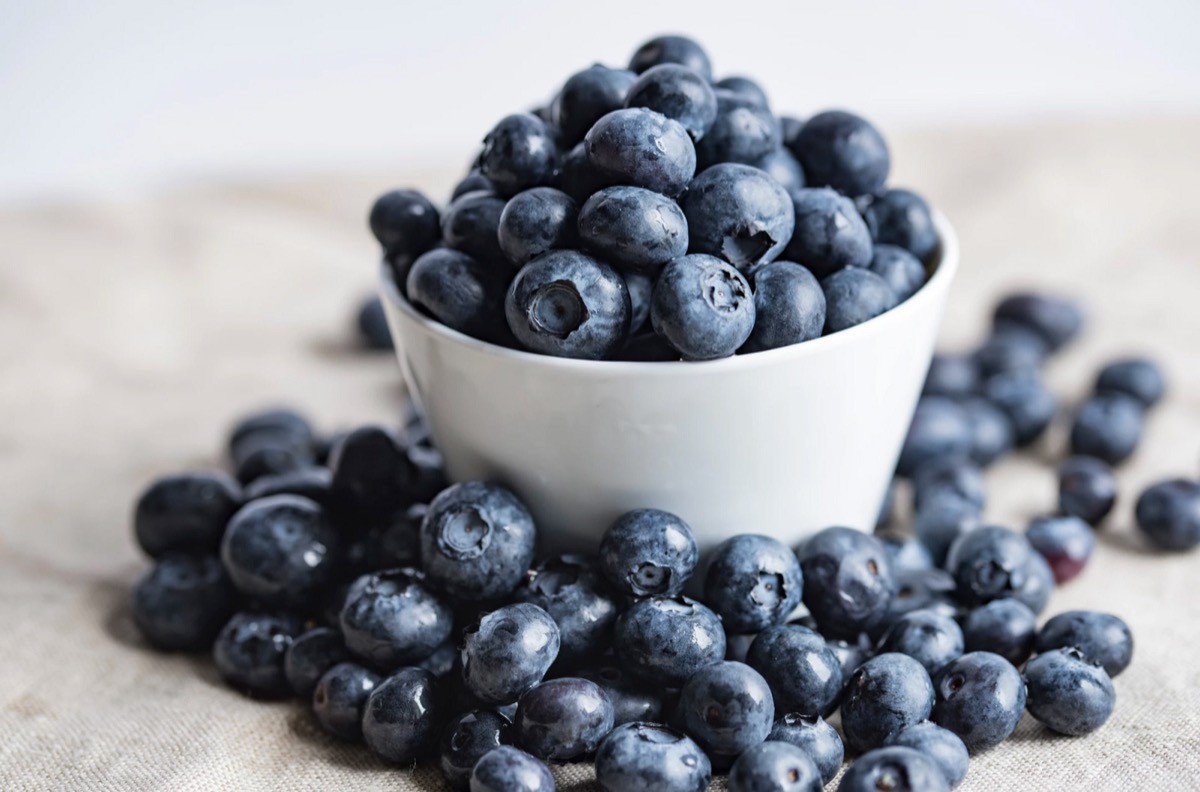
Blueberries - the Small but Mighty Fruit
The mini antioxidant fruit that you won't want to leave out this summer
by

Hunter
Published on
•
4
minute read
Key Takeaways
One cup of fresh or frozen blueberries daily can significantly improve memory and cognitive function in both older adults and children.
Blueberries contain anthocyanins, powerful plant compounds that specifically support brain health and mental clarity.
Research shows that consuming 1-2 cups of blueberries provides optimal cognitive benefits throughout your lifespan.
The dark purple color in blueberries indicates high concentrations of brain-boosting flavonoids that enhance your ability to think and recall information.
Here in New England, blueberry season is upon us, and there are delicious, sweet, fresh blueberries in about every store. We've all heard that berries are beneficial for health, loaded with antioxidants, vitamins, and nutrients.
Truly, backed by research, there are profound health benefits of eating blueberries.
Not only are they a good source of healthy carbohydrate but they contain many different vitamins and minerals including B vitamins; in particular B6, folate, and choline, as well as vitamin C, and vitamin K.
They are also an abundant source of minerals including potassium, calcium, magnesium, manganese, and zinc.
The particular health benefit of blueberries that we will be focusing on today is a particular phytochemical (plant chemical) otherwise known as a flavonoid -- specifically the flavonoid anthocyanin.
This is a compound that is typically found in dark colored fruits and vegetables, and it is highly concentrated in blueberries. Given that they are sweet and delicious, these berries are an easy source to obtain health-promoting plant chemicals.
You may be thinking…what are phytochemicals good for?
Well….they have shown to be particularly good for improving cognition (help one's ability to think as well recall information). In other words, they help improve memory.
Study One
A recent study published in the European Journal of Nutrition took 37 participants ages 60–75 and randomized them into one of two groups.
One group got 24 grams of freeze-dried blueberries (the experimental group), and the others received a blueberry placebo. This occurred over 90 days.
They were assessed at the beginning, halfway, and at the end of the study for improvements in gait, balance, and cognition. No improvement in gait or balance were observed, however, the blueberry group showed significant improvements in the cognitive tests that they completed throughout the study.
It is important to note that 24 grams of freeze-dried blueberries are equivalent to 1 cup fresh or frozen blueberries (Miller, et al. 2018)1.
Study Two
Another study published in the European Journal of Nutrition looked at the impact that blueberries can have on cognition, this time in a younger age population.
This study had 21 children ages 7–10 who were given either a placebo or 15 or 30 grams of a wild blueberry powder drink rich in anthocyanins. They were tested with various cognitive tests which encompassed memory, word recognition, response interference, response inhibition, and levels of processing.
They tested the participants in these different areas four times for up to 6 hours after ingestion of the wild blueberry powder.
It was determined that there were improvements to all of the study measures at each point of testing for those receiving the wild blueberry powder (30g group showed the best results) in the memory-related tasks, with no improvement observed with the placebo (Whyte, et, al. 2016)2.
From this study, a practical application would be for an individual to consume about 1–2 cups of blueberries.
*
Or use the AteMate app to help remind you to eat more blueberries more frequently!
Blueberries can certainly be part of any 'mindful' eating plan, pun intended. This food-based recommendation of blueberry consumption can be used to improve your brain, memory, and overall cognitive function throughout your lifespan.
* References
1. Miller, M.G., Hamilton, D.A., Joseph J.A., & Shukitt-Hale B. (2018). Dietary blueberry improves cognition among older adults in a randomized, double-blind, placebo-controlled trial. European Journal of Nutrition, 57(3),1169–1180. doi: 10.1007/s00394–017–1400–8 \[doi\] 2. Whyte, A.R., Schafer G., & Williams C.M. (2016). Cognitive effects following acute wild blueberry supplementation in 7- to 10-year-old children. European Journal of Nutrition, 55(6):2151–62. doi: 10.1007/s00394–015–1029–4 \[doi\]
* Hunter is a Registered Dietitian Nutritionist and owner of Reformed Nutrition, LLC. He is a Certified LEAP Therapist, a specialist in food sensitivities and gut healing. He also works with competitive athletes, those looking to gain strength, lose weight, and restore health, as well as families and student groups. He loves strength training, Whole Foods, farming/gardening, healthy fats, and pasture-raised animal products.
Ready to find your Healthy?
More posts from this Author
Hunter

Bone Broth and the Importance of Collagen Protein
Bone broth provides collagen protein that supports joint health, digestion, and sleep quality. Your body feels nourished from within.
May 24, 2019
4
minute read
Hunter
Food Sensitivities
Food sensitivities can show up as IBS, migraines, or joint pain days after eating. Tracking how you feel helps reveal patterns your body is trying to tell you.
Jul 16, 2019
3
minute read
Hunter

Importance of Logging Your Food
Food logging through photos or journals brings mindfulness back to eating in our fast-paced world. This simple practice helps you make more thoughtful choices while reconnecting with the joy of nourishing your body.
Apr 25, 2019
3
minute read