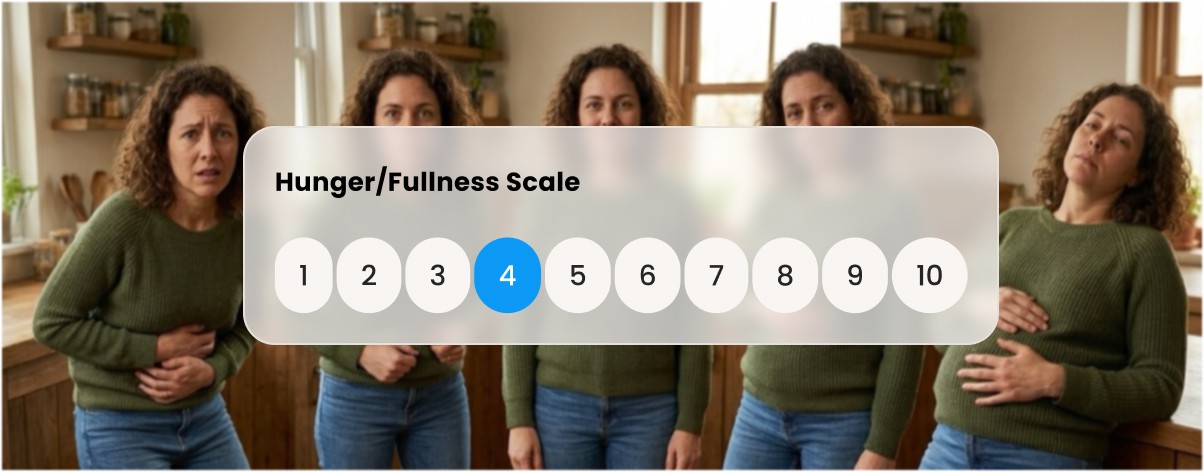

Hunger and Fullness Scale
The Hunger and Fullness Scale is a 1-10 awareness tool that helps you recognize and respond to your body's natural hunger and satiety signals.
The Hunger and Fullness Scale transforms eating from guesswork into awareness. This simple 1-10 scale helps you tune into your body's signals, where 1 represents extreme hunger (starving) and 10 represents extreme fullness (uncomfortably stuffed). Most of your eating experiences happen somewhere in the middle of this spectrum, with subtle cues your body sends throughout the day.
Note: there are also other variations like -6 to +6. Concept is the same, just using a different scale.
True hunger exists on a spectrum with many gradations between starving and stuffed. Your body constantly communicates its needs through physical sensations like gentle stomach rumbling, slight energy dips, or thoughts drifting toward food. Similarly, fullness signals arrive gradually, from the first hint of satisfaction to the comfortable feeling of being nourished.
Learning to recognize these signals takes practice and patience with yourself. The scale becomes a tool for building interoception, your ability to sense internal body signals. This awareness helps you eat when hungry but not ravenous, and stop when satisfied rather than uncomfortably full.
How It Works
Using the scale starts with pausing before meals to check in with your body. Ask yourself where you are on the 1-10 scale right now. Notice physical sensations in your stomach, your energy levels, and how food thoughts feel in your mind. A 3-4 on the scale often feels like gentle hunger, while a 6-7 represents comfortable satisfaction.
During meals, the scale helps you stay connected to changing sensations. Eating slowly and chewing thoroughly gives your body time to register fullness signals, which take about 20 minutes to reach your brain. You might start eating at a 3 and aim to finish around a 6 or 7, feeling nourished but not heavy.
The scale works best when you approach it with curiosity rather than rigid rules. Some days you might eat at a 2 and that's information, not a mistake. Other times you might reach an 8 and that's also valuable data about your eating patterns and what influences them.
Common Misconceptions
Many people think the scale has "right" and "wrong" numbers, but it's actually a neutral awareness tool. There's no perfect number to eat at or stop at. The goal isn't to always eat at exactly a 3 and stop at exactly a 7. Your needs change based on stress, sleep, activity levels, and countless other factors that make you human.
Another common misunderstanding is that you should never eat past a 7 or below a 3. This thinking can create new food rules that disconnect you from your body's actual signals. Sometimes you might enjoy a celebratory meal that takes you to an 8, or have a busy day where you eat at a 2. Both experiences provide information about your patterns without requiring judgment.
The scale also isn't meant to replace your enjoyment of food or social eating experiences. It's a tool that enhances awareness, not a rigid system that controls your choices. Learning to use it effectively means finding the balance between awareness and flexibility that works for your life.
How AteMate Can Help
AteMate's photo journaling naturally incorporates hunger and fullness awareness into your daily routine. When you photograph your meals, the app prompts you to notice where you are on the scale before eating and how satisfied you feel afterward. This creates a visual record of your hunger and fullness patterns over time.
The app's pattern-surfacing technology helps you identify trends in your eating timing and satisfaction levels without judgment. You might discover that you feel most satisfied when you eat at certain hunger levels, or notice how different foods affect your fullness signals. AteMate presents this information as neutral data to support your decision-making.
Hint: Using the customizable Food Q&As in the app, you can setup your Hunger and Fullness scale any way you like.
Through consistent logging, AteMate helps you build the self-awareness that makes the hunger and fullness scale most effective. The app never tells you when to eat or stop eating, but it does help you see patterns in your own hunger and satiety signals, empowering you to make choices that align with your body's needs and your personal Healthy.