3 Intuitive Eating Recipes for Busy Professionals
That Actually Fit Your Schedule
by

AteMate
Published on
•
6
minute read
Key Takeaways
Ask yourself what your body actually wants before cooking, not what you think you should eat.
Use the protein + vegetables + fat template to create satisfying meals without rigid measurements.
Build power bowls from whatever ingredients you have on hand - there are no wrong combinations.
Lock in a default breakfast framework to reduce morning decision fatigue.
Take photos of meals to notice patterns in what leaves you energized versus depleted.
If you've read our guide on intuitive eating for busy professionals, you already know the core idea: you don't need more willpower. You need better systems.
One of those systems is having a small rotation of default meals — fast, satisfying, and easy enough that you'll actually make them when your day goes sideways.
That's what these recipes are. Not "clean eating" meals. Not macro-optimized meal prep projects. Just three solid options built around one simple template: protein + vegetables + fat. That combination keeps you full, supports steady energy, and doesn't require you to think too hard.
Each recipe takes 15 minutes or less. Each one is designed to be eaten without guilt, adjusted based on how you're feeling, and repeated as often as it serves you.
Before You Cook: The One Question That Changes Everything
Intuitive eating recipes aren't special because of the ingredients. They're special because of the awareness you bring to them.
Before you make any of these meals, take ten seconds and ask yourself: What does my body actually want right now?
Not what you "should" eat. Not what you had yesterday. What sounds satisfying, energizing, and real to you in this moment?
That's where intuitive eating starts. The recipe is just the vehicle.
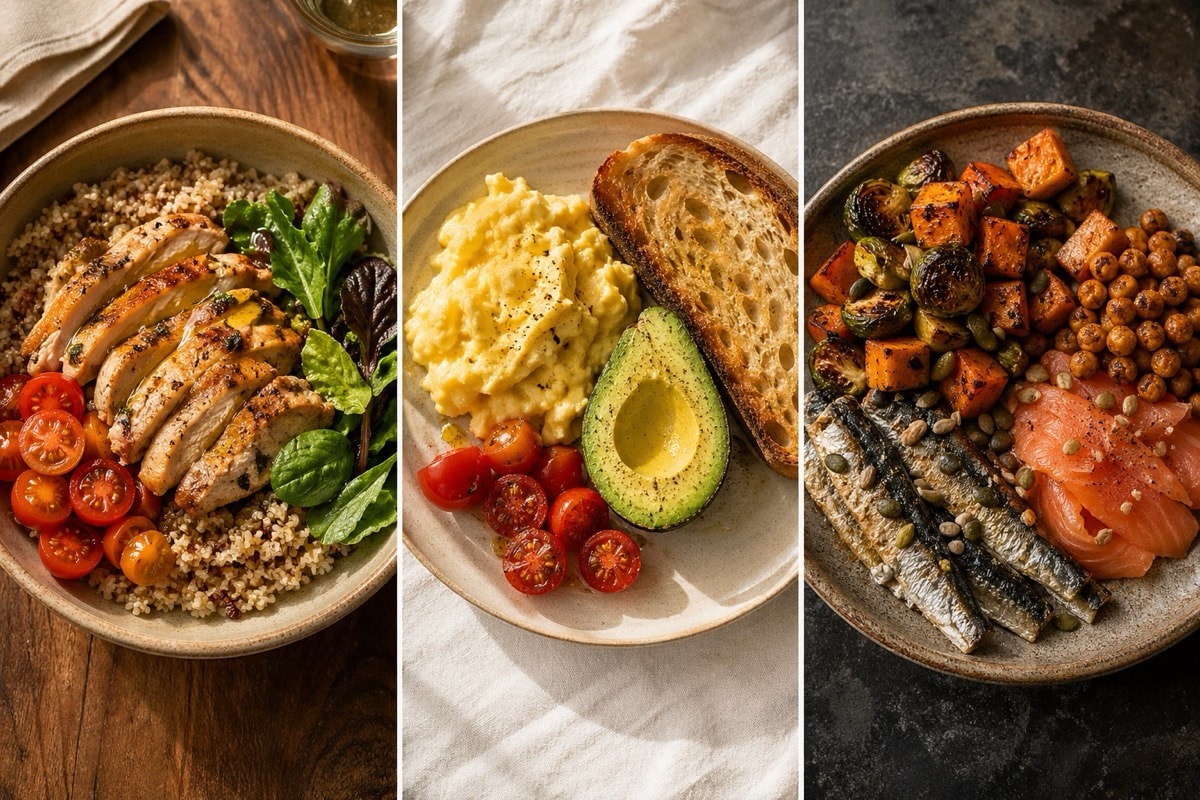
Recipe 1: The 10-Minute Power Bowl
Best for: Lunch between back-to-back meetings, or dinner when you've got nothing left to give.
This is the default meal Ray talks about in our intuitive eating guide — the one that's always in rotation because it requires almost no decision-making. You build it from whatever you have, and it always works.
Ingredients (serves 1)
1 cup cooked grain (rice, quinoa, farro — whatever's already in your fridge or pantry)
1 palm-sized portion of protein (rotisserie chicken, canned tuna, a fried egg, leftover salmon — any of it works)
1–2 handfuls of vegetables (leafy greens, roasted broccoli, sliced cucumber, cherry tomatoes — raw or cooked)
1–2 tablespoons of a fat source (olive oil, avocado, tahini, or a simple dressing)
Salt, pepper, lemon juice or vinegar to taste
Method
Warm the grain and protein if needed — one minute in the microwave is fine.
Add your vegetables on top or alongside.
Drizzle with olive oil or whichever fat you're using.
Season with salt, pepper, and a squeeze of lemon.
Eat.
Why it works for intuitive eating
There are no measurements here because none are needed. You're building a plate based on what looks satisfying to you right now. Some days you want more protein. Some days you want it half vegetables. Follow that instinct. Your body is giving you information.
If you use AteMate, snap a photo before you eat. Not to log calories — to start noticing patterns. Over time you'll see which versions of this bowl leave you energized at 3pm and which ones don't.
Recipe 2: Eggs Any Way You Want Them (With a Reason)
Best for: Breakfast you'll actually repeat. Reducing the morning decision that quietly drains your focus before your first meeting.
One of the most underrated moves a busy professional can make is locking in a default breakfast. Not because you're "supposed to" eat the same thing every day — but because decision fatigue is real, and spending mental energy on breakfast is a waste of it.
This recipe is a framework, not a fixed dish. Make it your default for a few weeks and notice how much lighter your mornings feel.
Ingredients (serves 1)
2–3 eggs (scrambled, fried, poached, or soft boiled — whatever takes the least effort today)
1 handful of vegetables you can eat raw or quickly sauté (spinach, cherry tomatoes, sliced capsicum, avocado)
1 slice of sourdough, rye bread, or a small portion of cooked sweet potato
Olive oil or butter for cooking
Salt, pepper, fresh herbs if you have them
Method
Heat a small pan over medium heat with olive oil or butter.
Cook eggs however you're feeling today. Scrambled takes two minutes. A soft boil takes seven. Let that choice be low-stakes.
While eggs cook, prep your vegetables — slice, tear, or plate them as-is.
Toast bread or reheat sweet potato if using.
Plate everything together. Season and eat before you open your laptop.
Why it works for intuitive eating
The built-in flexibility is the point. You're not following a rigid script — you're practicing a gentle structure that leaves room for how you actually feel that morning. Hungry? Add more eggs. Running late? Skip the toast. Not feeling vegetables today? That's fine.
Eating this before checking your phone or email is the mindful meal Ray recommends in the linked article — the five-minute reset before the chaos starts.
Recipe 3: The Anti-3pm-Crash Plate
Best for: Lunch that prevents the energy crash, or a late afternoon meal when you've skipped lunch and you know it.
The 3pm crash isn't a willpower failure. It's often a blood sugar response to a lunch that was either too light, too fast, or eaten while answering emails without registering that you'd eaten at all.
This meal is designed to fix that. It's satisfying enough to actually land, and balanced enough to keep you steady through the afternoon.
Ingredients (serves 1)
1 palm-sized portion of protein with some fat content (a tin of sardines in olive oil, smoked salmon, leftover chicken thighs, a boiled egg with hummus)
1 cup of roasted or raw vegetables (anything you enjoy)
1 small portion of slow-digesting carbohydrate (half a cup of lentils, a piece of rye crispbread, or a small serve of chickpeas)
A handful of something with crunch (toasted nuts, seeds, or sliced cucumber)
A simple dressing: 1 tablespoon olive oil + 1 tablespoon lemon juice + a pinch of salt
Method
If roasting vegetables, do it in batches on the weekend or the night before — 20 minutes at 200°C with olive oil and salt. This removes the daily cooking step entirely.
Plate your protein, vegetables, and carbohydrate.
Add crunch.
Dress and season.
Sit down to eat it. Not at your desk. Not in front of a screen. Two minutes to plate it, ten minutes to actually eat it.
Why it works for intuitive eating
The goal with this meal isn't to hit a specific macro number — it's to eat something substantial enough that your body registers the meal. Eating too quickly or too distracted means your brain doesn't get the satiety signal until you're already overfull or reaching for something else an hour later.
The act of sitting down — even briefly — is what changes the experience. This is the single mindful meal Ray recommends building into your day. It doesn't require a perfect environment. A chair and a plate is enough.
A Note on Following These Recipes (Or Not)
These aren't rules. They're starting points.
If you make the power bowl and realize you hate quinoa, swap it for rice. If eggs every morning sounds exhausting after two weeks, change it. If the anti-crash plate needs a different protein because you don't like sardines, use whatever you actually want to eat.
Intuitive eating recipes are just scaffolding. The real skill is learning to pay attention to how food makes you feel — and adjusting based on that feedback.
A simple way to build that skill: use a visual food journal like AteMate to snap a photo of what you eat and add a quick note about how you felt afterward. Not to track. Not to count anything. Just to start seeing patterns.
Over a few weeks, those patterns tell you more about what your body needs than any nutrition guide will.
The Bigger Picture
These three recipes reflect what intuitive eating for busy professionals actually looks like in practice. Not Instagram-worthy meal prep containers. Not perfectly portioned plates. Just solid, repeatable meals that give your body what it needs, reduce your daily decision load, and leave room for how you actually feel on any given day.
For a deeper look at the principles behind this approach, read our full guide: Intuitive Eating for Busy Professionals: How to Stay Mindful in a Fast-Paced World.
And if you want a simple tool to start noticing patterns without counting a single calorie, download AteMate and try it for a week. Snap a photo, add a note about how you felt, and see what you learn.