Key Takeaways
Ignore social media opinions about food choices and trust your own body's signals instead of external noise.
Context matters when making food decisions - what works for you today might not work tomorrow.
Making food choices out of fear or guilt often leads to more problematic eating patterns than the original choice would have.
You don't need willpower to make good food decisions, you need awareness of your patterns and genuine self-trust.
Dessert isn't inherently good or bad - your relationship with it and the circumstances around eating it determine its impact.
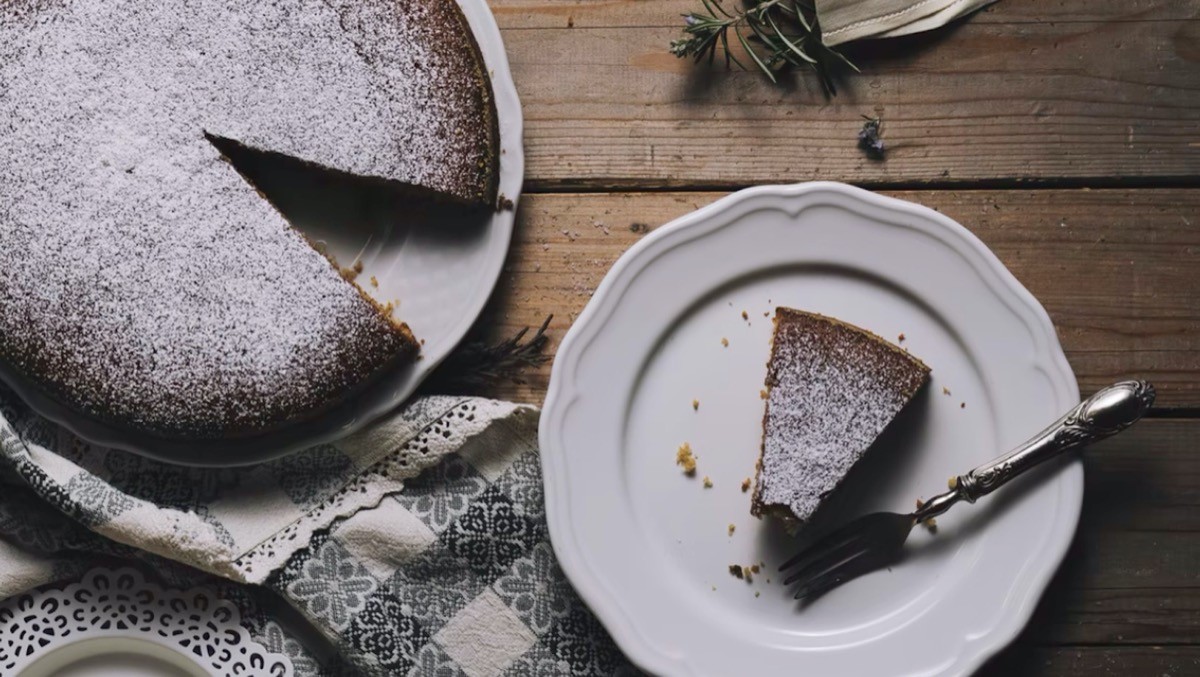
Dessert has an… interesting… rep right now. It's hard to want to eat less added sugar without someone accusing you of toxic diet culture. It's equally as difficult to have an ice cream cone on a Wednesday night with your kids without someone calling you out on the added ingredients you're not only feeding yourself, but your innocent, helpless 5-year-old.
The information overwhelm is frustrating at best and utterly overwhelming and debilitating at worst. Let's discuss the ways to decipher when dessert is "good" or "bad" and how to choose the best path for YOU.
1. Drown out the Noise
When it comes to split opinions on anything, whether it be dessert, how much protein we should be eating, high carb or low carb, 10k steps a day, or lifting or cardio, the first thing we have to do is drown out the noise.
If you're scrolling Instagram or TikTok and see a video on why you should (or shouldn't) be eating dessert tonight, scroll past it. You don't need anybody else clouding your judgment. The more we listen to other people who don't know us or our lives tell us what we "should" do, the less trust we have in ourselves.
I learn better with examples so here's one for you: It's Wednesday night. You just had dinner. It was delicious, balanced, and filling. You're not hungry but you do know you have some leftover cookies on the counter. You kind of want one and you have room for dessert. You decide to have a cookie but as you do, you remember the TikTok you saw earlier that said that the cookie you have every night is what's making you break out, have digestive issues, making you angry, all these crazy things. One cookie, one TikTok, and all hell breaks loose.
So you don't have the cookie. But you can't stop thinking about it. Just one bite as you walk past the kitchen. Just one more bite when you decide to make a cup of tea to curb your cravings. One last bite before you sit back down. Ah screw it, at this point, you've already eaten half the cookie, may as well even it out. And now, of course, according to that TikTok, everything bad that will happen to you is already in the works because of that one cookie so you may as well have 3… right?
Conversely, the same thing could happen if you never wanted the cookie. You finish dinner, you have no sugar cravings, you know the cookies are on the counter but you don't care. Until you see your partner eating one and remember the Instagram post you saw with the lady who said, "I used to never eat cookies with my partner because of diet culture. Now I ALWAYS eat cookies with my partner and if I don't, I'll binge." So you fear binging and eat a cookie out of fear of your body instead of trust and genuine desire of your body.
Both examples are fueled by opposite ends of the spectrum. Both lead to you acting on the opinions and lives of others instead of your own.
To make decisions you stand behind and decipher between good and bad, you need to see content and choose to drown it out if it doesn't apply to you. Your mind and body know best, the internet doesn't. Trust YOU. Drown out the noise.
2. Context is Key
What's good for you right now might not be good for you tomorrow. Good and bad are situational. There's a time and place for literally everything, including dessert. Context is key.
Let's dive into an example: It's 10 am, the office brings in donuts, and you haven't had breakfast yet. Last time you had a donut at 10 am it led you into a spiral of sugar and carb cravings all day and it was difficult to get a hold of. By the end of the day, you never feel your best and you know that, but you decide you have "no willpower" and have one anyway feeling guilt and anxiety with every bite.
In this context, it's hard to argue that the donut was a "good" thing for you. I'd argue it wasn't. It was a choice you made seemingly by force of the environment (the office with donuts) and by a false story you told yourself (that you have no willpower). The truth is, you don't need willpower right now. You need breakfast. You know that. Instead, you're making a choice based on the notion that you can't do what's best for you simply because a donut has more power over you than your well-being. That's not true!
I don't mean this to say you can't have the donut, you totally can. But in this specific context, the decision has few positive emotions and far more negative motivation.
Let's shift the context.
It's 10 am, and the office brings in donuts. You had breakfast at 9 am -- 2 boiled eggs and an apple. It wasn't much but it'll do the job until your mid-morning snack. The donuts look so good, you haven't tried this bakery yet and you've been wanting to. You debate skipping it and just having the nuts and berries you packed with you but know you'll be thinking about that donut all day long. Instead, you cut it in half (or take a full, whatever you're hungry for), pull out your berries, and eat both around 11 am when you're hungry for it.
The context is totally different. The donut doesn't hurt you, doesn't affect your entire day, you eat it with joy, you could argue it's what your body needed at the time providing you with energy and genuine satisfaction.
Dessert is great in some contexts and not so great in others and that's okay. Know your situation, know what your body needs, and make decisions accordingly. For me, dessert is almost always great after dinner (I'm level-headed, satisfied, and ready to enjoy it) and almost never a positive choice after breakfast (I have other things to do, I probably don't want to do them and I'm procrastinating by eating dessert mindlessly. I never feel good after this one).
3. Trial and Error
Practice is key to finding what's right for you, especially when what's right can change day to day and moment to moment. But over time, you'll see patterns in your mind and body and understand more and more what the good and bad decisions are for you in all situations. You'll be able to make decisions more effortlessly, with less noise, and more confidence.
You'll understand your portion sizes for dessert, how decadent or light you need it to be at that moment, and the why behind why you want or need it (or don't!). Give yourself permission to not always do it right and the okay to learn from that and adjust.
Shameless plug for the AteMate App, this is where food journaling comes in clutch! It helps you understand how you feel after every choice and if it's something you'd want to repeat in that specific context. It gives you the platform and structure to ask yourself, "What went right? What went wrong? What do I want to adjust next time?"
Good and bad isn't as black and white as you think. Dessert is a natural and delicious part of life. YOU and only you get to choose what place it has in your life. Drown out the noise, understand your context, and practice trial and error to find your practical balance. You got this.
*
_With my clients, I focus on shifting habits without restricting or counting calories to achieve sustainable weight loss or weight maintenance. We use practical nutrition so we can live life and feel our best! If you're ready to dive deep into your habits and feel confident about your choices surrounding food again, book a free consultation with me here!
Ready to find your Healthy?
More posts from this Author

Leena Abed

3 Tips to a Balanced Halloween
Halloween treats don't have to mean choosing between restriction and overindulgence. You can enjoy the festivities mindfully while staying true to your goals.
Oct 27, 2020
3
minute read
Leena Abed

3 Tips to a Healthy Thanksgiving
Three simple strategies help you enjoy Thanksgiving while honoring your body's needs. You can feel balanced and satisfied without stress.
Nov 20, 2020
3
minute read
Leena Abed

3 Tips to Managing Treats During the Holidays & A Spice Cookie Bar Recipe!
Practical strategies help you enjoy holiday treats while feeling balanced and intentional. You can savor the season without stress.
Dec 11, 2020
4
minute read