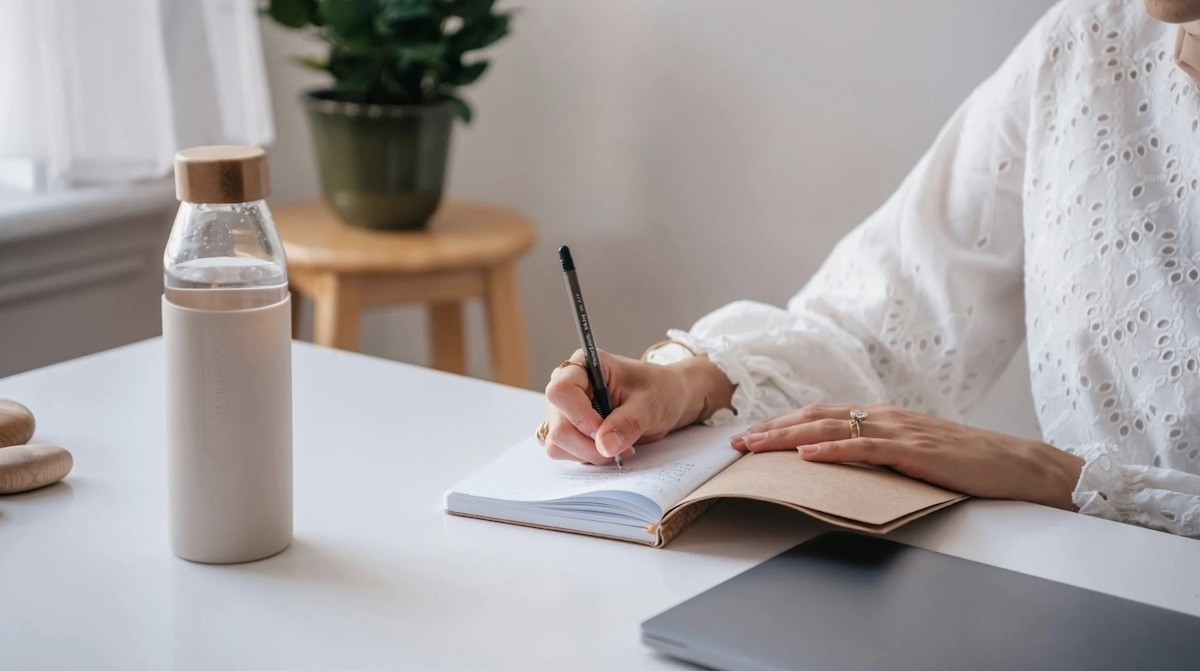
Food Journaling
by

AteMate
Published on
•
3
minute read
Last updated on
Food journaling is the practice of recording what you eat and the context around it. Not to judge it. Not to control it. But to understand it.
At its best, food journaling builds awareness. Awareness of patterns, habits, and how daily choices affect how you feel.
The goal is not perfect tracking. The goal is insight you can use.
What food journaling actually is
Food journaling is a tool for reflection.
It can include:
What you ate
When you ate
How you felt before or after
Hunger, fullness, energy, or mood
Context like stress, sleep, or schedule
It does not require calorie counting. It does not require detailed measurements. It does not require doing it every single day.
How food journaling is different from tracking
Traditional tracking focuses on compliance and often restriction..
Did you hit the numbers?
Did you stay within limits?
Food journaling focuses on understanding.
What patterns keep showing up?
What makes certain days easier or harder?
How do different choices affect you? Instead of telling you what to change, journaling helps you see what is already happening.
Why food journaling works in real life
Most habits are invisible while you are living them.
Food journaling makes patterns visible, especially when:
Routines change
Stress increases
Progress feels inconsistent
Motivation dips
When patterns are visible, change feels lighter. You are not guessing or starting over. You are adjusting with context.
What makes food journaling sustainable
Food journaling works best when it is:
Simple
Flexible
Non-judgmental
That might mean:
Logging meals without details
Using photos instead of text
Reflecting once a day instead of every meal
Skipping days when life is busy
Consistency matters more than completeness.
Common misconceptions about food journaling
"Food journaling means obsessing over food." Only if it is framed around control. Awareness-based journaling reduces obsession by replacing guesswork with clarity. "You have to journal everything." You do not. Partial data still reveals patterns. "Food journaling is only for weight loss." Food journaling supports many goals, including better energy, emotional awareness, and habit consistency.
How to start food journaling without pressure
A simple place to begin:
Log one meal per day
Notice one thing about it
Hunger, satiety, mood, energy, or context
That is enough to start seeing patterns over time.
A supportive next step
Food journaling becomes more helpful when it includes more than just food.
Seeing meals alongside sleep, stress, movement, and mood can reveal connections that are easy to miss otherwise.
If you want a simple, flexible way to journal without pressure, AteMate is built for that.
It is designed to help you reflect on daily choices and build progress you can repeat.
Ready to find your Healthy?
Medical Review by Erin Nitschke, EdD
Reviewed by Erin Nitschke, NFPT-CPT, NSCA-CPT, ACE Health Coach
Dr. Erin Nitschke is a health and human performance college professor and member of the ACE Scientific Advisory Panel. This article was reviewed for medical accuracy and adherence to current nutritional guidelines.