

Coach Spotlight: Caroline
Highlighting coaches that use AteMate to partner with their clients seeking
by

Caroline Tobias
Published on
•
4
minute read
Key Takeaways
Speech and eating use the same oral structures, making speech therapists uniquely qualified to address feeding disorders in babies and children.
Supporting new mothers' nutritional needs is just as important as caring for the baby when addressing breastfeeding challenges.
Personal experience with feeding difficulties can deepen a practitioner's empathy and understanding of what families go through.
Trying a disliked food repeatedly doesn't guarantee you'll develop a taste for it, and that's perfectly normal.
Professional expertise combined with lived experience creates more compassionate and effective healthcare support.
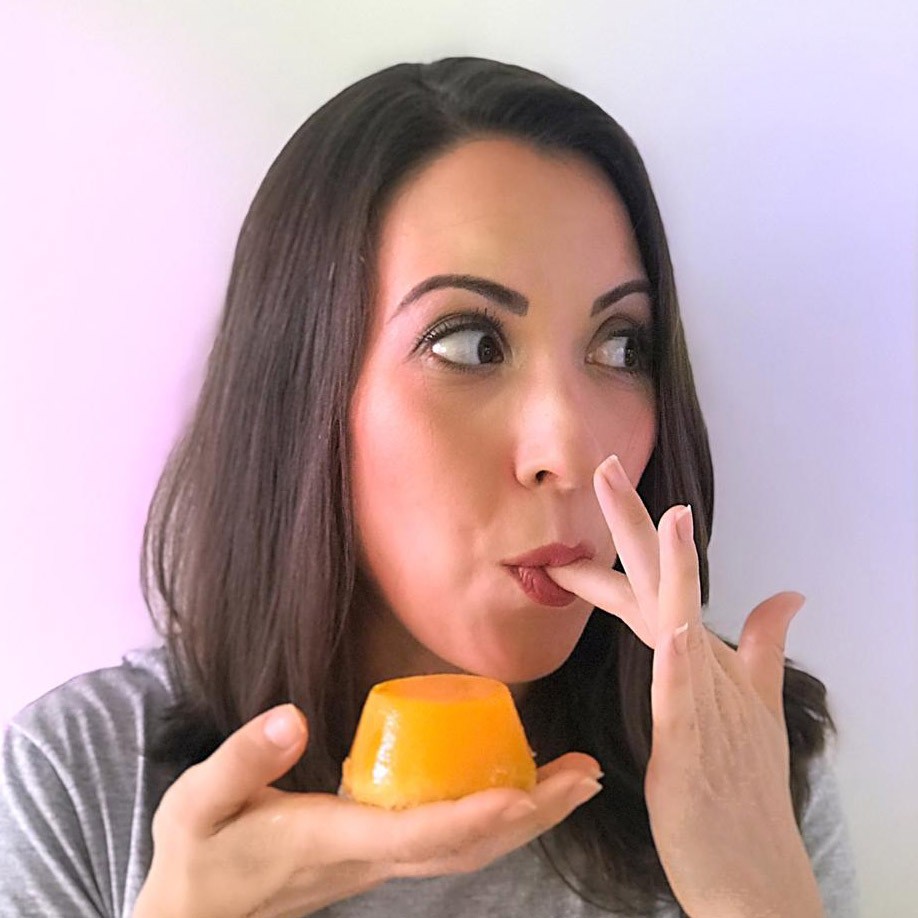
Hi! My name is Caroline, and I'm a certified Speech and Language therapist, Certified Breastfeeding Specialist, and Integrative Nutrition Health Coach. While I'm sure all of those sound completely unrelated, let me take you on a tour of my experience and you'll see exactly why I needed all three of these distinctions to bring the best possible services for my clients.
Why I do what I do:
When I graduated with my Master of Science in Communication Sciences and Disorders from Teachers College at Columbia University, I knew that I wanted to work primarily with babies and toddlers on feeding and swallowing disorders. Sounds strange, I know. Except -- think about how we talk, and then think about how we eat! Same area, right? Speech is what we call an "overlaid function," meaning that it's something we can do with our mouth, but it's not the primary function. While communication is something that brings a lot of richness to our lives, we need food to live!
I started out working in a community hospital. I worked in the Neonatal Intensive Care Unit (NICU) with babies learning early feeding skills, in outpatient services with children who were having feeding and swallowing and communication issues, as well as in acute care with adults who were diagnosed with dysphagia (the fancy name for feeding and swallowing disorders!) and cognitive-communication disorders. It was a lot! But I love learning and I got to work with people from all walks of life.
It was in this position that I studied to become a certified breastfeeding specialist, as I wanted to support families in the NICU as much as possible. It was during this training that I learned more about maternal factors for breastfeeding, which is why I became a health coach. When we think of new parenthood, we often think of taking care of that newborn without really considering a new mother's needs. I believe that we need to care for the entire dyad and that the best way to do that is through supporting parents with evidence-based, holistic practice.
Then, in 2019, I had my son who had lots of feeding issues of his own. I learned firsthand how difficult it can be from a parent's point of view, and this gave me the courage to leave my cushy hospital job and branch out into my own private practice. I now see parents both prenatally and postnatal who are concerned with issues relating to breastfeeding and bottle feeding, as well as parents who are starting to provide solid food to their babies and want to make sure that they are doing so in a safe and productive way!
5 things people don't know about me:
1. I'm currently doing a US road trip with my husband, son, and dog. We've been to 8 states thus far with lots more to come! Follow us on our journey at @campernicus on IG. 2. In my early 20s, I attended the French Culinary Institute until I realized I'd rather go out to eat on a Friday or Saturday night than cook for other people. Shoutout to all chefs though -- you all are amazing! 3. I lived in Turkey for a year and love all things Turkish, especially the coffee! 4. I've done three half marathons, and I have a goal to do a full marathon someday. Running doesn't come easily to me though -- I have to really work at it and I'm still usually the slowest one on the trail! 5. My favorite sport is stand-up paddleboarding! I love all things water and beach. I think I was a fish in a past life!
My favorite/least favorite foods:
Least favorite food -- this is easy. I hate onions. I actually tried really hard to like them. Have you heard that if you try a food 42 times, you will learn to like it? For six weeks, I ate raw onions every single day. At the end of those six weeks, I decided it was never going to happen! I will eat onions if they're cut up very small and cooked in food, but I'll be that person at your table asking for no onions, please!
My favorite food is a little bit harder because I love so many. I usually think in terms of cuisines. I love tacos from Mexico, pupusas from El Salvador, butter chicken from India, manti from Turkey, and anything with avocado or pulled pork! My husband is from England, and my favorite treat when we visit his family is scotch eggs from Harrods (probably the only thing I can afford there anyway). Also, I'm from Virginia, and I could eat key lime pie for the rest of my life without getting sick of it.
My top health tip:
Remembering that life is a practice, not just a series of goals. This is something I'm continually reminding myself. It can be so hard getting caught up in doing all the "right" things that I have to keep telling myself that perfection isn't the goal. Life is always about progress. 80% is better than 70% which is better than 40%. Every day is a new opportunity to start over, and that's not only ok, it's amazing that we have this chance to try again every single time we have a choice to make. There is nothing like working with critically ill babies and adults to make you appreciate every minute you're granted on this planet, and while I am by no means "perfect" with regards to how I eat and take care of my body (hello last night's lemon meringue tart!), finding the time to savor life's little treats is just as important as your next kale salad.
*
Caroline is an Integrative Nutrition Health coach and a licensed pediatric feeding specialist. Through her company, Nest Level Care (www.nestlevelcare.com, @nestlevelcare), she provides health and wellness coaching for new mothers, while also supporting families with feeding practices for children, whether they are breastfeeding, bottle feeding, or starting solids! When she isn't providing individualized services for her Nest Level Care clients, you can find her on Instagram (@campernicus), traveling around the US in a travel trailer with her husband, son, and dog, or watching episodes of _The Great British Baking Show.
Ready to find your Healthy?
More posts from this Author
Caroline Tobias

A Step Before Self Care
Sometimes self-care starts with giving yourself permission to let other things go first. You might find peace in prioritizing rest.
Mar 2, 2021
3
minute read
Caroline Tobias

Decision Fatigue
Routine turns overwhelming food choices into simple categories, saving mental energy for what matters most. You'll feel calmer and more present during meals.
Nov 10, 2020
3
minute read
Caroline Tobias

I Have A Love Hate Relationship with the Holidays
Setting one simple boundary around holiday treats can transform how you experience the season. You might find more joy in celebrations.
Dec 15, 2020
3
minute read
Similar Posts from our Blog
Livia
3 Reasons Why You Are Eating Without Feeling Hungry
'Are you eating without feeling hungry? Why does this occur and what
Mar 3, 2020
4
minute read

Leena Abed

3 Tips to a Balanced Halloween
'Halloween will without a doubt look different this year but you can
Oct 27, 2020
3
minute read
Leena Abed

3 Tips to a Healthy Thanksgiving
Thanksgiving you're ready to just enjoy food, but that doesn't mean you
Nov 20, 2020
3
minute read